from d2l import torch as d2l
import torch
from torch import nn
from torch.nn import functional as FTraining and decoding
Same Trainer, with gradient_clip_val=1 on the optimizer:
trainer = d2l.Trainer(max_epochs=100, gradient_clip_val=1, num_gpus=1)
trainer.fit(model, data)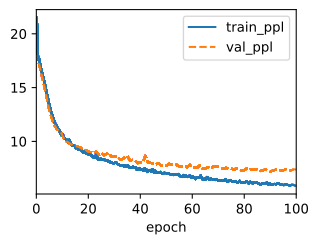
ppl = float(model.board.data['val_ppl'][-1].y)
pred = model.predict('time traveller', 20, data.vocab, d2l.try_gpu())
print(f'perplexity {ppl:.1f}, {pred!r}')
perplexity 7.4, 'time traveller and the time time t'Output looks like simple English-shaped text — same character- level statistics the from-scratch version learned, in much less training time.